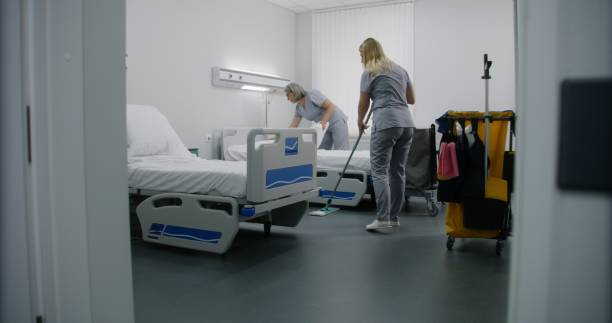
Cleaning a medical facility is not the same job as cleaning an office. In a clinic, day surgery, or aged care setting, the surfaces people touch and the air they share can carry infection from one patient to the next. That is why medical facility cleaning standards in Australia are built around one thing above all else: keeping the environment safe, hygienic and compliant with national infection control requirements.
If you manage a GP clinic, dental practice, allied health rooms, a specialist centre, or a larger healthcare service, this guide explains exactly which standards apply, what they require of you, and how a compliant cleaning program actually works on the ground.
We’ve kept it practical, because the difference between “looking clean” and “being clinically safe” is where most facilities get caught out. Let’s unpack each part in detail.
Medical facilities in Australia must clean in accordance with national infection control standards, principally the NSQHS Preventing and Controlling Infections Standard and the Australian Guidelines for the Prevention and Control of Infection in Healthcare, and are supported by state-based policies and each facility’s own documented environmental cleaning and auditing program. Cleaning is risk-based: the higher the infection risk of an area, the more frequent and rigorous the cleaning and disinfection required.
Why Are Cleaning Standards Important in Medical Facilities?
Every healthcare environment carries a background risk that ordinary workplaces do not. People arrive unwell, procedures break the skin, and pathogens move easily between hands, surfaces and equipment. Cleaning standards exist to interrupt that chain.
The main reasons they matter:
- Preventing healthcare-associated infections (HAIs). HAIs are infections a patient picks up as a result of receiving care rather than from their original illness. Environmental surfaces and shared equipment are well-established sources of transmission, so effective cleaning and disinfection directly lowers HAI risk.
- Protecting everyone in the building. Patients (many of whom are immunocompromised), visitors, and your own clinical and reception staff all rely on a clean environment. Cleaning standards protect the people least able to fight off infection.
- Reducing cross-contamination. Structured cleaning, correctly colour-coded equipment, and proper disinfectant contact times prevent the spread of germs from a high-risk area to a low-risk one. For example, from a treatment room to the waiting area.
- Maintaining accreditation and compliance. Environmental cleanliness is assessed as part of healthcare accreditation. Fail here, and you risk conditions on accreditation, reputational damage and, in the worst case, harm to a patient.
In practice, healthcare cleaning standards and infection prevention cleaning are two sides of the same coin. You are not cleaning to make the space look tidy. You are cleaning to control infection.
What Regulations and Standards Apply to Medical Facility Cleaning in Australia?
There is no single “cleaning rulebook” that sits on its own. Instead, medical facility cleaning in Australia is governed by a layered framework: national safety and quality standards, national clinical guidelines, state and territory health policies, and each facility’s internal cleaning program that ties them all together.
NSQHS Preventing and Controlling Infections Standard
The National Safety and Quality Health Service (NSQHS) Standards are developed by the Australian Commission on Safety and Quality in Health Care (ACSQHC) and are the benchmark against which most Australian health services are accredited. The third of the eight standards is the Preventing and Controlling Infections Standard (updated in 2021 from its former name, the Preventing and Controlling Healthcare-Associated Infection Standard).
For cleaning, this standard is the anchor. It requires health service organisations to have systems in place for a clean, safe and hygienic environment, including:
- Environmental cleaning that reflects the level of infection risk in each area
- Clear responsibilities for who cleans what, when and to what standard
- Routine cleaning and disinfection of surfaces and shared equipment
- Monitoring and auditing to confirm cleaning is actually working
Under this standard, cleaning is not a background chore, it is a governed clinical safety activity, with the specific actions on maintaining a clean environment (Actions 3.13 and 3.14) sitting squarely in scope during accreditation.
Australian Guidelines for the Prevention and Control of Infection in Healthcare
The Australian Guidelines for the Prevention and Control of Infection in Healthcare (produced by the National Health and Medical Research Council with ACSQHC) are the national clinical reference for infection control, including environmental cleaning. This is where the detail lives.
Two principles from the guidelines shape almost every cleaning decision:
- A risk-based approach. Cleaning frequency and method are matched to the likelihood that an area will contribute to infection. A sterile procedure room is treated very differently from an administrative office.
- Routine plus targeted cleaning. Facilities need scheduled routine cleaning of all areas, plus additional cleaning and disinfection triggered by events such as spills, patient turnover in a treatment room, or an outbreak.
The guidelines also set expectations for cleaning after each patient in clinical areas, the correct use of detergents and disinfectants, and the cleaning of frequently touched surfaces at a frequency that reflects the contamination risk.
State and Territory Healthcare Cleaning Requirements
In addition to the national framework, each state and territory has its own health department policies. If you operate in Victoria, this layer applies to you first.
Victoria. This is an area where much of the published advice is out of date. The old standalone Cleaning Standards for Victorian Health Facilities document has been rescinded, and since 1 July 2017 environmental cleanliness in Victorian public health services has been assessed through NSQHS accreditation and patient-reported cleanliness data (via the Victorian Healthcare Experience Survey) rather than a separate cleaning key performance indicator. In practice, this means Victorian facilities are expected to run their own documented environmental cleaning and auditing program that demonstrates compliance with NSQHS Standard 3 and the national guidelines. Surveillance of healthcare-associated infections in Victorian public hospitals is coordinated through VICNISS. So the responsibility hasn’t loosened; it has shifted onto each facility to prove its own program works.
New South Wales. NSW Health maintains an environmental cleaning policy that sets out cleaning responsibilities, frequencies, and colour-coding requirements for public health facilities, aligned with national standards.
Queensland. Queensland Health applies environmental cleaning requirements for its facilities within the same national infection-control framework, again matched to area risk.
The takeaway: healthcare facilities must follow the national infection control standards and guidelines, applied through their state’s health policies and their own internal cleaning program. For a Melbourne clinic or day facility, that means a Victoria-aware program built on NSQHS Standard 3.
What Are the Key Cleaning Requirements for Medical Facilities?
Whatever your facility type, a compliant cleaning program comes down to doing a handful of things properly and consistently.
Cleaning and Disinfection of High-Touch Surfaces
High-touch (or “frequently touched”) surfaces are the workhorses of cross-contamination, the things dozens of hands make contact with every day. These need cleaning and disinfection far more often than surfaces people rarely touch. Priority items include:
- Door handles, push plates and grab rails
- Examination beds, plinths and adjustment levers
- Waiting room chairs, armrests and reception counters
- Light switches, taps and soap dispensers
- Medical equipment surfaces, keyboards and shared devices
Effective high-touch surface cleaning follows a “clean, then disinfect” logic: remove the visible soil first with detergent, then apply the disinfectant so it can actually work on the surface.
Use of Approved Cleaning Products and Disinfectants
Medical disinfection procedures rely on using the right chemical correctly. Healthcare facilities generally use hospital-grade disinfectants, which in Australia must be listed or registered on the Australian Register of Therapeutic Goods (ARTG) and regulated by the Therapeutic Goods Administration (TGA).
Getting disinfection right depends on three things people routinely get wrong:
- Correct product for the task: a hospital-grade disinfectant, or a TGA-approved product with specific claims (for example, against particular organisms) where required.
- Correct dilution: mixing too weak makes it ineffective; too strong wastes product and can damage surfaces or harm staff.
- Correct contact (dwell) time: the surface must stay visibly wet for the time stated on the label, or the disinfectant hasn’t done its job.
Always follow the manufacturer’s instructions on the label. They are not a suggestion; they are the tested conditions under which the product actually kills what it claims to.
Personal Protective Equipment (PPE) Requirements
Cleaning staff work around body fluids, sharps, and contaminated surfaces, so PPE protects both the cleaner and the environment. Depending on the task and area, this can include:
- Gloves (single-use, changed between tasks and areas)
- Masks or eye protection where splash or aerosol risk exists
- Protective clothing such as aprons or gowns
- Safe procedures for putting on and removing PPE, and for hand hygiene before and after
PPE only works when it is used correctly and changed at the right moments; reusing gloves between a bathroom and a treatment room defeats the entire purpose.
Clinical Waste Management
Medical cleaning includes handling waste that ordinary cleaning never touches. Correct segregation and disposal is a compliance requirement, not an optional extra:
- Sharps disposed of in approved puncture-resistant containers, never overfilled
- Clinical and biohazard waste separated into the correct labelled streams
- Waste segregation kept consistent so general, recyclable, clinical and sharps waste never mix
Poor waste handling is both an infection risk and a workplace safety hazard, and it’s one of the first things an auditor will look at.
How Often Should Medical Facilities Be Cleaned?
There is no single answer, because cleaning frequency is driven by risk, not the clock. That said, here is a practical baseline for common areas in a medical facility.
| Area | Typical Cleaning Requirement |
| Reception & waiting areas | Regular daily cleaning, with high-touch points cleaned more often |
| Treatment & consultation rooms | Cleaned between patients, plus a full daily clean |
| Bathrooms & toilets | Multiple checks and cleans throughout the day |
| Isolation areas | Enhanced, infection-control cleaning to a stricter protocol |
| High-risk clinical areas | Frequent disinfection, often after every procedure |
The real drivers of frequency are:
- Risk assessment of the area: what happens there, and how likely it is to spread infection
- Patient traffic: busier spaces contaminate faster
- Type of healthcare service: a surgical day facility has very different needs to a physiotherapy practice
A well-designed cleaning schedule states the area, the task, the frequency and who is responsible, so nothing is left to memory or goodwill.
Different Cleaning Standards for Medical Facility Areas
Australian infection control uses functional-area risk categories to determine how intensively an area must be cleaned. In simple terms, the higher the risk to patients, the higher the cleaning standard.
Low-Risk Areas
Spaces where patient contact is limited and the infection risk is low:
- Administrative offices
- Reception and general foyer areas
- Corridors and non-clinical storage
These need regular routine cleaning to a good general standard, with attention to high-touch points.
Medium-Risk Areas
Spaces with regular patient contact but no invasive or high-risk procedures:
- Consultation rooms
- General treatment rooms
- Patient waiting areas
These require more frequent cleaning and disinfection of surfaces and equipment, including cleaning between patients where relevant.
High-Risk Clinical Areas
Spaces where invasive procedures happen, or where highly vulnerable patients are treated:
- Operating and procedure rooms
- Isolation rooms
- Sterile and treatment procedure areas
These demand enhanced cleaning protocols: cleaning after every case, rigorous disinfection, tighter documentation and, in some cases, specialised methods. The reasoning is straightforward, the consequences of a missed contaminant here can be severe, so the margin for error is smallest.
What Should Be Included in a Medical Facility Cleaning Checklist?
A documented checklist turns “we clean regularly” into a system you can prove. A strong medical facility cleaning checklist covers three layers.
1. Daily cleaning tasks
- Surface cleaning of all work areas and high-touch points
- Floor cleaning appropriate to each area
- Bathroom and toilet sanitation, checked multiple times a day
- Waste removal and bin sanitising
2. Infection control tasks
- Disinfection of clinical surfaces and shared equipment
- Spill management using the correct procedure for blood and body fluids
- Cleaning of medical equipment between uses
- Correct use and disposal of PPE
3. Compliance documentation
- Written cleaning schedules by area, task and frequency
- Staff sign-off records confirming tasks were completed
- Inspection and audit reports with any corrective actions
If it isn’t documented, from an auditor’s point of view it didn’t happen. The paperwork is what protects the facility.
Why Cleaning Audits Are Important in Healthcare Facilities
A cleaning audit is a way for a facility to verify that its program is actually working, rather than assuming it is. Regular healthcare cleaning audits do four things:
- Measure cleaning effectiveness: through visual inspection and, in higher-risk settings, objective methods that check whether surfaces are truly clean, not just tidy.
- Identify compliance gaps: the missed surfaces, skipped contact times or gaps in documentation that quietly undermine infection control.
- Prepare for accreditation: so environmental cleanliness reviews hold up, with evidence rather than good intentions.
- Drive improvement: audit findings feed back into schedules, training and product choices, lifting standards over time.
Medical cleaning compliance is not a once-a-year event. The facilities that do it best treat auditing as an ongoing feedback loop.
Common Medical Facility Cleaning Mistakes to Avoid
Most cleaning failures in healthcare aren’t dramatic. They’re small, repeated shortcuts. These are the ones we see most often.
Mistake 1: Using standard commercial cleaning methods
General office cleaning aims for appearance. Healthcare cleaning aims for infection control. Using ordinary methods, products and equipment in a clinical setting, without colour-coded gear, hospital-grade disinfectants or between-patient cleaning, leaves infection risks in place even when the room looks spotless.
Mistake 2: Incorrect disinfectant usage
The three classic errors: the wrong chemical for the job, the wrong dilution, and not leaving the product on the surface long enough. Any one of these can mean a surface that appears disinfected but isn’t. This is why product knowledge and staff training matter as much as effort.
Mistake 3: Lack of documented cleaning procedures
Without written cleaning plans, trained staff and quality checks, standards drift. New staff guess, tasks get skipped under time pressure, and there’s no evidence trail when it’s needed. Documentation is what makes cleaning consistent and defensible.
How to Choose a Medical Cleaning Service Provider
If you outsource, the provider becomes part of your infection control system, so choose as if patient safety depends on it, because it does. Look for:
- Experience with healthcare facilities. Cleaning clinics, dental practices, day surgeries or aged care is a specialist skill. Ask specifically what medical environments they clean, not just their general client list.
- Infection control training. Staff should be trained in infection prevention, standard precautions, PPE use and safe cleaning practices and the provider should be able to show it.
- Compliance documentation. They should provide cleaning schedules, sign-off records and audit-ready reporting as standard.
- Appropriate products and equipment. Hospital-grade, TGA-approved disinfectants and colour-coded, area-specific equipment to prevent cross-contamination.
- Regular quality audits. A provider confident in their work will welcome an audit and report the results to you.
A good medical cleaning company should make your accreditation easier, not add risk to it.
Ready to bring your facility’s cleaning up to standard?
Cityview Cleaning and Caretakers provides specialised medical and healthcare cleaning across Melbourne, built around infection control, hospital-grade products and audit-ready documentation. If you’d like a cleaning program that supports your accreditation and protects your patients, call us at 1300 813 066 or get in touch for a tailored quote.
Frequently Asked Questions
What cleaning standards apply to medical facilities in Australia?
Medical facilities in Australia follow national infection control standards, principally the NSQHS Preventing and Controlling Infections Standard and the Australian Guidelines for the Prevention and Control of Infection in Healthcare, which are applied through state-based health policies and each facility’s own documented cleaning and auditing program. Cleaning is risk-based, matched to the infection risk of each area.
How is medical cleaning different from office cleaning?
Office cleaning focuses on appearance and general hygiene. Medical cleaning focuses on infection prevention: cleaning between patients, disinfecting high-touch surfaces to set contact times, using hospital-grade products, handling clinical waste and documenting everything for compliance.
What disinfectants are used in medical facilities?
Healthcare facilities typically use hospital-grade disinfectants that are listed or registered on the Australian Register of Therapeutic Goods (ARTG) and regulated by the TGA. Products must be used at the correct dilution and left for the label’s stated contact time to be effective.
How often should medical clinics be cleaned?
It depends on the area’s risk level, patient traffic and the type of service. As a baseline, reception and bathrooms are cleaned daily (bathrooms multiple times), treatment rooms are cleaned between patients, and high-risk clinical areas are disinfected after every procedure.
Do medical cleaners need special training?
Yes. Healthcare cleaning staff should be trained in infection control procedures, standard precautions, correct PPE use, safe handling of clinical waste, and the proper use of disinfectants, well beyond what general commercial cleaning requires.